Interpreting Trauma Through Play: A Guide for Play Therapists
A Free Guide To Help You Recognize Trauma Themes in Play
Unlock the Magic of Play in Healing Trauma
Hey There Amazing Play Therapist!
You're doing important work. You help little hearts heal through play, navigating the complex emotions of trauma without words. I want to support you in this vital mission with a tool crafted with love and expertise.

You know that play is more than just play—it’s a child’s language. But sometimes, figuring out what they’re truly communicating in a session can feel like solving a mystery.
Maybe you've wondered:
❓ Is this repetitive play just a phase, or is it a trauma response?
❓ What does aggressive play really mean, and how should I respond?
❓ Am I missing key themes that could help guide my treatment plan?
I get it.
Identifying trauma themes in play therapy is complex, and we don’t always have the answers on the spot. That’s exactly why I created this FREE guide.
This Guide Is More Than Just A Manual
It's a reference guide for those moments when you need clarity and direction in your sessions. It’s completely FREE because I believe in the work you do and want to empower you to do it even better.
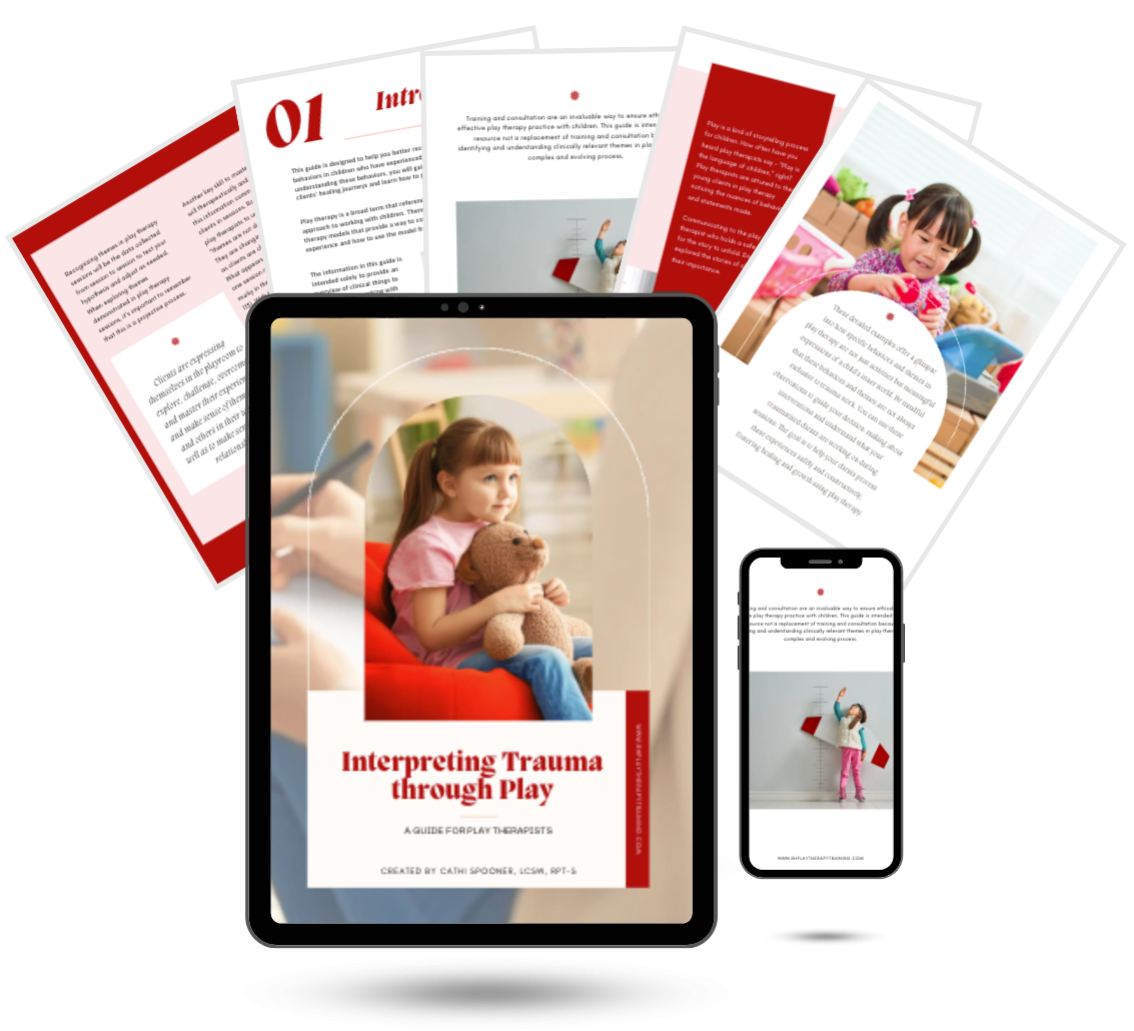
This will be you go-to for:

Understanding with Heart
Dive deep into the subtle signals of play that reveal the untold stories of children’s trauma.

Engaging with Intention
Learn how to shape your interventions with precision and compassionate foresight.
Thoroughly And Lovingly Put Together
This guide offers you a comprehensive look into the therapeutic power of play and how children communicate insights about their healing process through play behaviors and themes.
You'll Learn:
How Play Reflects Trauma
Understand how children use play to communicate their emotions, fears, and past experiences when words aren’t enough.
Key Trauma Themes in Play Therapy
Identify common patterns like control and mastery play, reenactment, aggression, regression, and symbolic representation—so you can recognize what a child is working through.
Making Sense of Play Behaviors
Learn how to distinguish between normal developmental play and trauma-related themes, so you can respond appropriately and support healing.
Effective Therapist Responses
Get practical strategies on how to hold space, respond to challenging play themes, and guide children through their therapeutic process without leading or misinterpreting.
Why Supervision & Consultation Matter
Explore how ongoing training and peer support can strengthen your ability to assess and intervene with confidence.
Effective Therapist Responses
Get practical strategies on how to hold space, respond to challenging play themes, and guide children through their therapeutic process without leading or misinterpreting.
Why Supervision & Consultation Matter
Explore how ongoing training and peer support can strengthen your ability to assess and intervene with confidence.
Ready to Deepen Your Impact?
You’re already making a difference, and with this guide, you can reach even further.
Enter your email below to access this essential resource and continue your journey of healing and transformation.