Best Strategies to Use Play Therapy with Teens
 Cathi Spooner
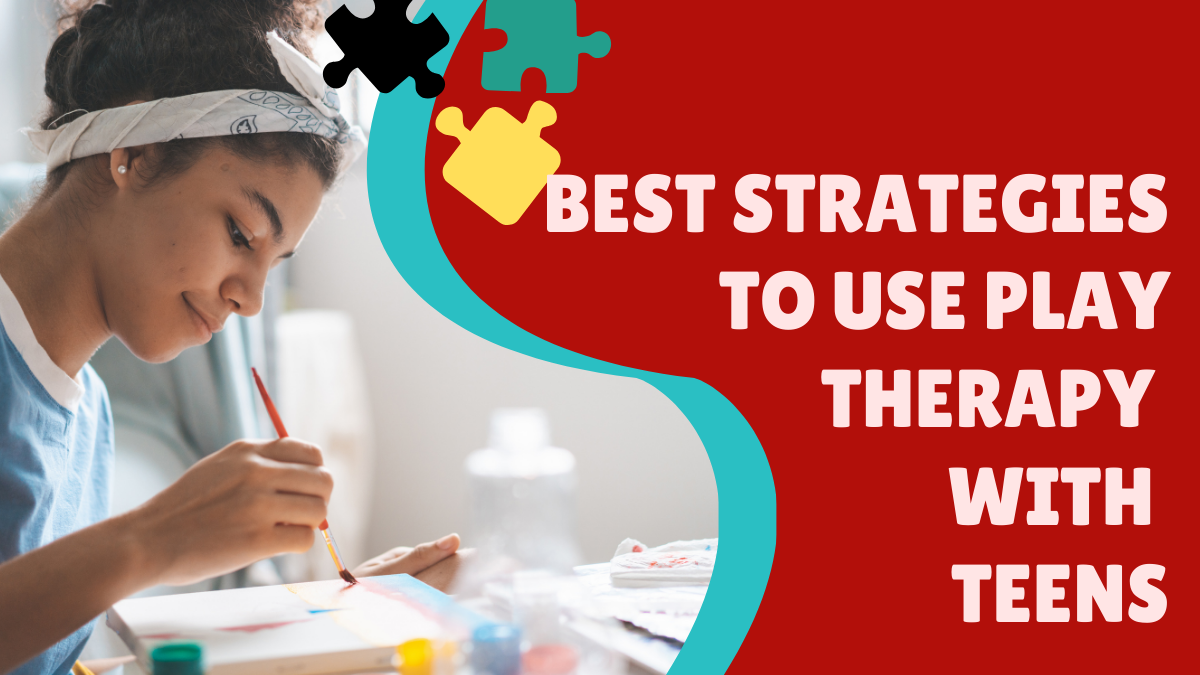
Why play therapy works with teens — and how to use it effectively
If you’ve ever sat across from a teenager who barely speaks, gives one-word answers, or shuts down completely in session, you’re not alone.
Many therapists walk away from those sessions wondering:
-
Is play therapy even appropriate for teens?
-
Am I treating them like little kids?
-
Why can’t I get them to open up?
These questions come up all the time in my consultation work with child and adolescent therapists. And they point to one of the biggest misconceptions in our field — the belief that play therapy is only for young children.
In reality, play therapy can be incredibly effective with adolescents. The real question isn’t whether play therapy works with teens.
It’s how we use it.
The Misconception About Play Therapy and Teenagers
Play therapy was originally developed to help children process emotional experiences through play, so it makes sense that many clinicians assume teens should transition into traditional talk therapy.
But here’s the problem:
Traditional talk therapy was designed for adults.
Adolescents are not adults — developmentally or neurologically.
During adolescence, the brain is undergoing massive growth and reorganization. The prefrontal cortex — the area responsible for insight, emotional regulation, and complex verbal processing — is still developing. When emotions are intense or overwhelming, teens often cannot access the cognitive skills that talk therapy depends on.
So when we rely solely on conversation, we may unintentionally ask adolescents to do something their brains are not yet ready to do.
That’s often when therapists experience silence, disengagement, or the assumption that the teen is “resistant” or “not ready for therapy.”
In my experience, most adolescents are ready — they just need a different pathway into the work.
A Foundational Shift: Expression Before Talking
Working effectively with teens requires a mindset shift.
Instead of assuming healing happens primarily through talking, play therapy invites expression first — and insight later.
Using expressive modalities allows adolescents to:
-
Access experiences they don’t yet have words for
-
Express emotions safely and indirectly
-
Reduce emotional overwhelm
-
Engage without feeling pressured to perform verbally
This is where the therapeutic powers of play become essential.
According to the Association for Play Therapy, play therapy uses a theoretical model within a strong therapeutic relationship to help clients access the therapeutic powers of play. With adolescents, expressive arts often become the bridge that makes this possible.
How I Introduce Play Therapy to Adolescents
Language matters.
I rarely tell teens, “We’re going to play.” That framing can feel infantilizing and create immediate resistance.
Instead, I might say:
-
“Let’s try something different.”
-
“Sometimes art or music helps us explore things in another way.”
-
“We can experiment and see what happens.”
The goal is to create curiosity and safety — not pressure.
Some teens need conversation first. Others engage more quickly through experiential activities. I follow their cues and prioritize emotional safety above everything else.
If they don’t feel safe, they won’t engage.
Choosing Activities That Actually Work for Teens
The best activities are guided by the adolescent’s interests.
I often start with music because it’s developmentally relevant and emotionally accessible.
Examples include:
-
Listening to a meaningful song together
-
Identifying lyrics that resonate with them
-
Creating art or sand tray scenes inspired by music
-
Sculpting symbols from clay that represent emotions or experiences
When introducing expressive work, I emphasize:
-
There is no right or wrong way.
-
Nothing is graded.
-
This is a no-judgment space.
That permission alone often reduces anxiety and opens engagement.
Sometimes progress begins simply by coloring a mandala while listening to calming music. Two sessions of quiet coloring can help a nervous system settle enough for deeper work later.
Holding the Therapeutic Space With Adolescents
One of the most important skills when working with teens is learning how to be, rather than pushing for progress.
Many adolescents are evaluating whether therapy is safe before they participate fully. They may worry about:
-
Being judged
-
Parents finding out what they share
-
Previous negative therapy experiences
-
Feeling forced into treatment
My role is to create a space where:
-
Pace is respected
-
Expression is voluntary
-
Silence is allowed
-
Authentic presence replaces pressure
This is where child-centered play therapy principles become incredibly valuable — even when using an integrative model with adolescents.
We lead with attunement, congruence, and unconditional positive regard.
Making Sense of What Happens in Session
One area where therapists often struggle is interpreting expressive work appropriately.
Expressive arts are not projective tests.
I don’t analyze every detail or impose meaning. Instead, I observe themes emerging over time. These themes guide my clinical decision-making — helping me understand:
-
Where the adolescent is in the change process
-
What emotional work is unfolding
-
How to support next steps therapeutically
Sometimes clients talk about what they created. Sometimes they don’t — and that’s okay.
Healing can occur without verbal explanation.
Why a Framework Matters
Without a theoretical framework, expressive work can start to feel like the “spaghetti against the wall” approach — trying random activities without clinical direction.
A cohesive play therapy framework helps answer:
-
Why this activity now?
-
What therapeutic power of play am I accessing?
-
Where is the client in the change process?
-
What should happen next?
When I feel stuck, I return to three anchors:
-
Case conceptualization — What is happening underneath the behavior?
-
My theoretical model — How does my framework guide intervention?
-
Stage of treatment — What does the client need right now?
That roadmap brings clarity back to the work.
Why Community and Consultation Matter
Play therapy can feel isolating, especially if you’re the only clinician in your setting using expressive or play-based approaches.
Even experienced therapists get stuck.
Consultation and community support help us:
-
Make sense of themes emerging in sessions
-
Strengthen clinical decision-making
-
Apply training knowledge in real cases
-
Avoid burnout and second-guessing
We are not meant to do this work alone.
Final Thoughts: Play Therapy Does Work With Teens
When adolescents struggle to talk, it isn’t a sign that therapy is failing.
Often, it means we need to shift how we invite healing.
By moving from conversation-first approaches to expression-first experiences, we meet teens where they are developmentally and neurologically.
Play therapy with adolescents is not about treating them like children.
It’s about giving them developmentally appropriate ways to access emotions, process experiences, and discover meaning — safely and authentically.
And when we do that well, engagement deepens, resistance softens, and meaningful change begins to emerge.
Categories: : Adolescents in Play Therapy, Art in Play Therapy, Community, Expressive Arts, Play Therapy, Play Therapy Academy, Play Therapy Elevation Circle, Podcast, Supervision