How to Get Better Results in Play Therapy Without Doing More
 Cathi Spooner
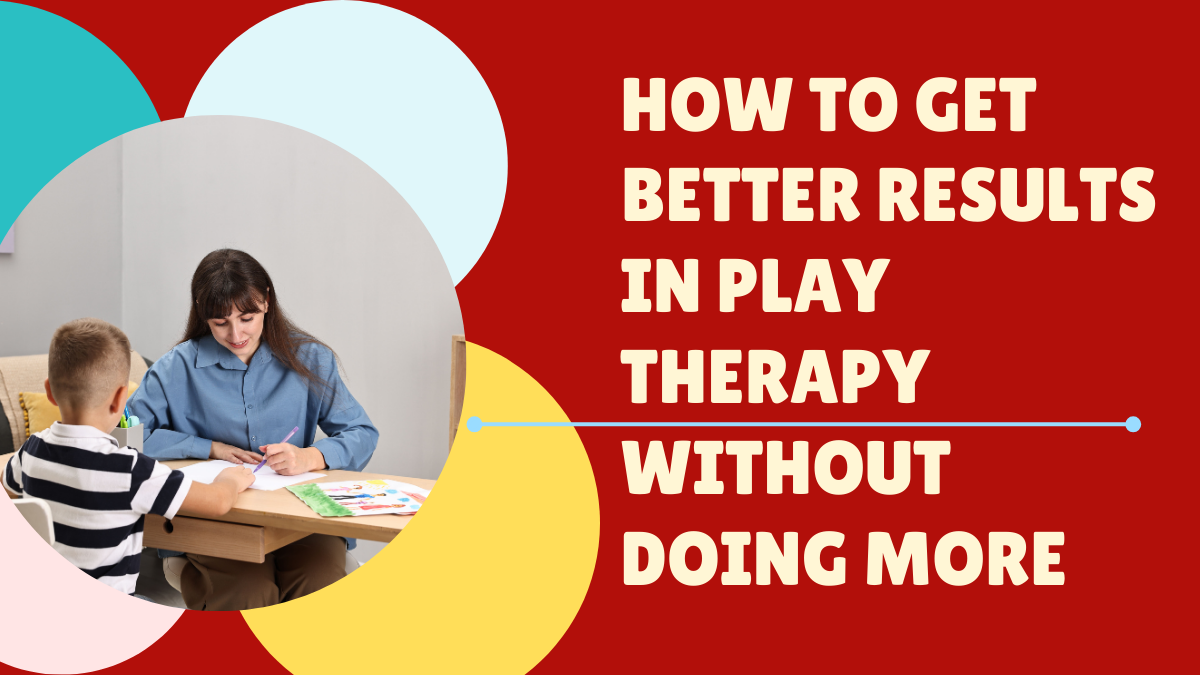
If you’ve ever walked out of a session wondering, “Did that even work?” or thought to yourself, “I’m not sure what just happened in there…”—you’re not alone.
Early in my play therapy journey, I remember getting caught in a cycle of constant searching—Amazon wishlists overflowing, Pinterest boards full of new techniques, and yet still feeling like I was spinning my wheels. I thought maybe the next toy or book or training would finally make everything click.
But what I’ve learned (and continue to teach) is that progress doesn’t come from doing more. It comes from being more intentional.
Let’s talk about what that actually means in clinical play therapy.
When Intuition Isn’t Enough
Now don’t get me wrong—intuition matters. It’s that deep knowing we bring to our work. But when it’s not guided by direction or structure, intuition can quickly turn into the “spaghetti method”: throwing techniques at the wall and hoping something sticks.
That’s not how we help kids heal.
So what does make the difference?
The Clinical Core: Case Conceptualization
It starts with something I talk about a lot: case conceptualization. Yes, I know the term might sound academic or like something from grad school that never quite made sense. But stay with me.
Think of case conceptualization as your clinical detective work. It’s how you gather and organize all the rich information from assessments, observations, and family history to form a working hypothesis about what’s going on beneath the surface.
I first heard the term “working hypothesis” years ago from Eliana Gil, and it stuck with me. It’s not a static statement—it evolves throughout the treatment process.
We ask: What’s the pattern? What’s sustaining the problem? What’s triggering it? What’s the intensity and frequency?
These aren’t just academic questions. They’re puzzle pieces that shape how we show up, what we prioritize in the playroom, and how we guide the healing process.
Play Therapy Isn’t Model-Agnostic
Your play therapy model matters. It isn’t just something you jot down on an intake form or slide into a treatment plan. It shapes what you do, how you do it, when you do it—and why you do it that way.
Whether you’re practicing Child-Centered Play Therapy, integrating CBT strategies, or using an attachment-based approach, your model is your clinical compass. It helps you assess progress, recognize when a child is moving through a stage of play, and determine what’s needed next.
Even in Child-Centered Play Therapy, there’s intention behind what you’re doing. There's structure behind that openness.
The Secret Sauce: Therapeutic Relationship
Now here’s where the magic happens—when case conceptualization, model fidelity, and relationship all work together. But life isn’t always that neat. Sometimes we’re leaning heavily into our case conceptualization. Other times we’re rooted in our play therapy model. And sometimes, we simply have to anchor ourselves in the therapeutic relationship.
Because when we’re unsure what to do, being fully present is always the right answer.
That’s the beauty of Child-Centered Play Therapy—it gives us permission to slow down, to lean into the relationship, to create that felt sense of safety, acceptance, and co-regulation.
And that therapeutic presence? It isn’t just for the child. Parents need to feel it too. They need to experience you as a calm, connected presence who can hold the big stuff with compassion and clinical clarity.
We’re Wired for Connection (Yes, Us Too)
As play therapists, we know the importance of connection. We teach it. We model it. But sometimes we forget—we need it too.
We are wired for connection. Neurobiologically, we need access to support. And that includes professional support, not just personal.
So let me ask: Where are you getting your support?
Because I talk to play therapists across the country (and even around the world), and one of the things I hear over and over is: “I’m the only play therapist at my agency.” Or, “I’m in private practice, and there’s no one nearby who really gets what I do.”
That was my experience almost 35 years ago when I started. There was no internet. No Instagram. Just me, a few school social workers trying out this thing called play therapy, and a lot of trial and error.
We've come a long way since then—but that isolation? It’s still real.
You Don’t Have to Do This Alone
Even seasoned therapists get stuck. Even after 35 years in the field, I still run into clinical puzzles where I need to talk it out with someone who gets it.
That’s why I created Play Therapy Elevation Circle—to build a space where we don’t have to figure it all out alone.
Inside the community, our case consultation calls often lead to powerful aha moments—not because of me, but because we come together as a group. My experience combines with yours, and someone brings in an insight that shifts everything. It’s collaborative. It’s energizing. It’s deeply validating.
Whether it’s a tough case, a hard day, or a moment of self-doubt, having a supportive space changes everything.
I’ve seen it. I’ve lived it.
Work Smarter, Not Harder
Here’s what I’ve learned: when you’re part of a strong community, you actually get time back. You stop spinning in circles. You stop second-guessing. You stop pouring hours into figuring something out alone.
Instead, you show up, share what’s going on, and get insight from people who’ve been there. That’s how we move from reactive to intentional.
So if you’ve been feeling stuck—like you’re trying to piece everything together without a clear plan—I want to invite you to a free webinar I’m hosting:
🗓 Sunday, January 25 at 4pm PT / 7pm ET
🎙 How to Stop Second-Guessing Every Clinical Decision (Even with Complex Cases)
📍 Register at rhplaytherapytraining.com
If you attend live, I’ve got a special gift for you.
Whether you’re fresh out of grad school or have been doing this work for years, my hope is that you’ll leave the webinar with a clearer sense of how to move forward—confidently, creatively, and with community behind you.
Because you’re not alone.
And you don’t have to do this alone, either.
Categories: : Burnout, Community, Imposter Syndrome, Play Therapy, Play Therapy Academy, Play Therapy Elevation Circle, Podcast, Self care