How to Use Poetry With Teens in Play Therapy for Self-Expression
 Cathi Spooner
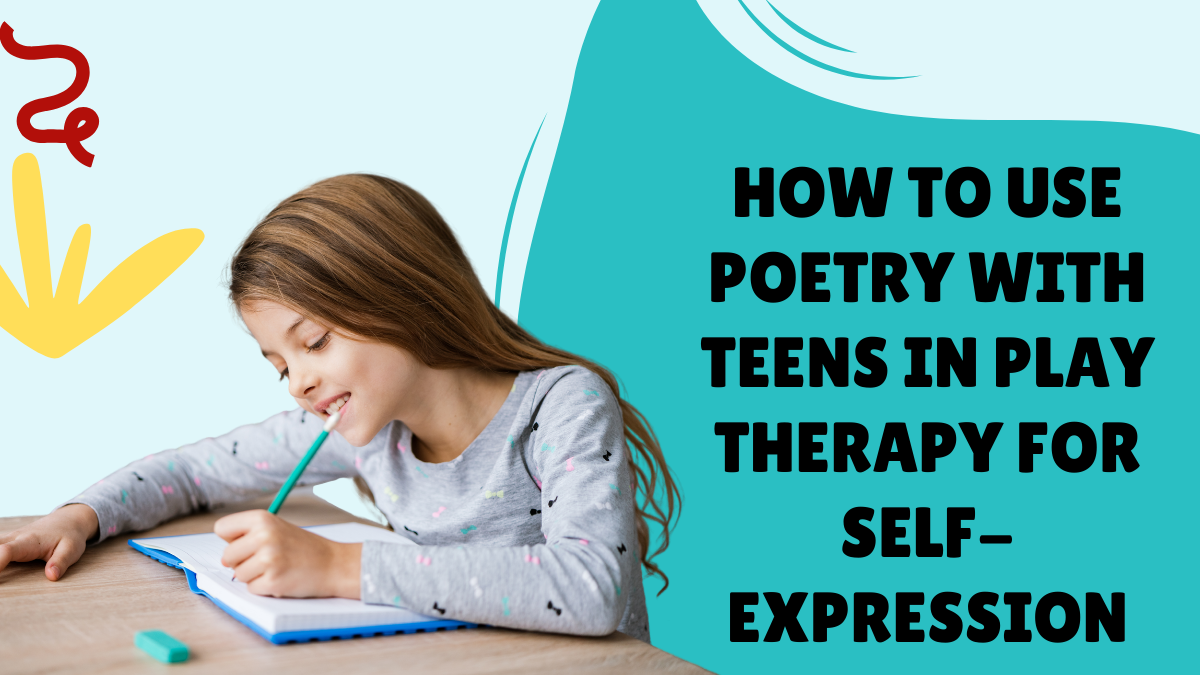
Creative ways to help adolescents express emotions, explore identity, and access the therapeutic powers of play through expressive arts.
When most people hear the word poetry, they think about English class.
Old poems.
Confusing metaphors.
Trying to figure out what the poet was “really” trying to say.
I’ll be honest—when I first heard about using poetry therapeutically, my initial reaction was something along the lines of “stick needles in my eyes.”
But years ago, when I was living in Virginia and helping organize trainings for the Virginia Association for Play Therapy, a colleague introduced poetry therapy during a training.
And by the end of that training, I was hooked.
What I realized is that poetry—when used as an expressive arts modality—can be an incredibly powerful way to help adolescents express what is happening inside of them.
Ep 111-how-to-use-poetry-with-t…
Since then, I’ve used poetry in play therapy sessions with teens, families, and groups, and I’ve found it to be one of the most effective ways to help adolescents access the therapeutic powers of play.
Why Poetry Works So Well With Adolescents
Adolescence is a developmental stage filled with identity exploration, emotional intensity, and shifting relationships.
Teens are often trying to figure out:
-
Who they are
-
What they believe
-
How they fit into the world
-
What their relationships mean
But talking directly about these things can feel overwhelming.
Poetry gives adolescents another pathway.
Instead of forcing insight or conversation, poetry allows them to:
-
Express emotions indirectly
-
Explore experiences symbolically
-
Reflect on identity and beliefs
-
Process difficult experiences creatively
Poetry provides a structure for self-expression while still leaving room for imagination and meaning-making.
In play therapy, that means poetry can help teens access the therapeutic powers of play, including:
-
Self-expression
-
Communication
-
Creative problem-solving
-
Emotional regulation
-
Identity development
All within the safety of the therapeutic relationship.
Poetry as an Expressive Arts Modality
It’s important to clarify something.
I’m not a poetry therapist in the same way that someone might be an art therapist or music therapist.
Instead, I integrate poetry into my play therapy theoretical model as one of many expressive arts tools.
Poetry becomes a way to help adolescents access experiences they may not yet be able to verbalize through traditional talk therapy.
Sometimes those experiences are stored implicitly—meaning they exist as sensations, emotions, or images rather than clear verbal memories.
Expressive arts activities like poetry help bring those experiences into awareness in a safe and creative way.
The Benefits of Poetry in Play Therapy
When used thoughtfully, poetry can support several important therapeutic processes for adolescents.
Self-expression
Poetry helps teens communicate feelings that may feel too complex or vulnerable to say out loud.
Emotional regulation
The writing process itself can be calming and meditative. Focusing on rhythm, words, and imagery can help regulate the nervous system.
Identity development
Adolescents are constantly exploring their values, beliefs, and sense of self. Poetry gives them space to reflect on these questions in a creative way.
Meaning-making
Writing allows teens to process experiences and explore what those experiences mean to them.
Validation
When adolescents see their emotions reflected in poetry—whether their own writing or someone else’s—they often feel seen, heard, and understood.
This aligns with what Daniel Siegel describes in interpersonal neurobiology: helping clients feel seen, heard, understood, and held.
And that sense of attuned connection is one of the most powerful elements of therapeutic change.
Practical Ways to Use Poetry in Play Therapy
There are many ways to integrate poetry into sessions with adolescents.
Here are several activities I use regularly.
1. “What If” Poems
If a teen is stuck in worry or catastrophic thinking, I might invite them to write a “What If” poem.
For example:
-
What if my fears came true?
-
What if things turned out differently?
-
What if I took a risk?
-
What if I discovered something about myself?
This activity helps adolescents explore their fears and assumptions creatively while also opening the door to new possibilities.
It can be especially useful when working with anxiety or rigid thinking patterns.
2. Song Lyric Poetry
Most teens connect deeply with music.
So another activity I love is using song lyrics as the starting point for poetry.
Here’s how it works:
-
The teen chooses a favorite song.
-
We look at the lyrics together.
-
They select one or two lines that resonate with them.
-
Those lines become the starting point for their own poem.
From there, they can expand on the ideas, emotions, or images the lyrics evoke.
This activity often feels less intimidating because the creative process has already started with the song.
3. Word-Bank Poetry
I also keep a container filled with individual words—nouns, verbs, adjectives, and other parts of speech.
The teen pulls out as many words as they want and uses those words to create a poem.
This activity is especially helpful for teens who feel stuck or intimidated by writing.
The words act as creative prompts and reduce pressure.
4. Poetry With Art or Clay
Poetry can also be combined with other expressive arts.
After writing a poem, the teen might:
-
Create artwork representing the poem
-
Sculpt a symbol from clay
-
Design a visual “cover” for the poem
This deepens the expressive process and allows multiple forms of creativity to emerge.
5. Blackout Poetry
Blackout poetry is another creative approach.
Using a magazine, newspaper, or old book page, the teen selects specific words to form a poem.
All other words are “blacked out” with marker or paint.
The result is a visual piece of art that also contains a poem.
Many adolescents love this activity because it combines creativity, art, and writing.
The Importance of a Theoretical Framework
Expressive activities should never be random.
Without a theoretical framework, therapists can fall into what I call the “spaghetti against the wall” approach—trying activities without clear therapeutic intention.
When poetry is integrated within a play therapy model, we can ask:
-
Which therapeutic power of play am I facilitating?
-
What developmental process is unfolding?
-
How does this activity support the client’s goals?
That framework ensures expressive arts activities are not just creative—they are clinically meaningful.
Final Thoughts
Poetry may not be the first tool that comes to mind when working with adolescents.
But when used thoughtfully within a play therapy framework, it can become a powerful avenue for:
-
Self-expression
-
emotional regulation
-
identity exploration
-
and healing.
For many teens, poetry offers a way to say what feels impossible to say out loud.
And sometimes, those few written words can open the door to profound therapeutic change.
Categories: : Adolescents in Play Therapy, Art in Play Therapy, Community, Expressive Arts, Play Therapy, Play Therapy Academy, Play Therapy Elevation Circle, Podcast, Supervision