Sand Tray Therapy with Teens: How to Use It Effectively in Play Therapy
 Cathi Spooner
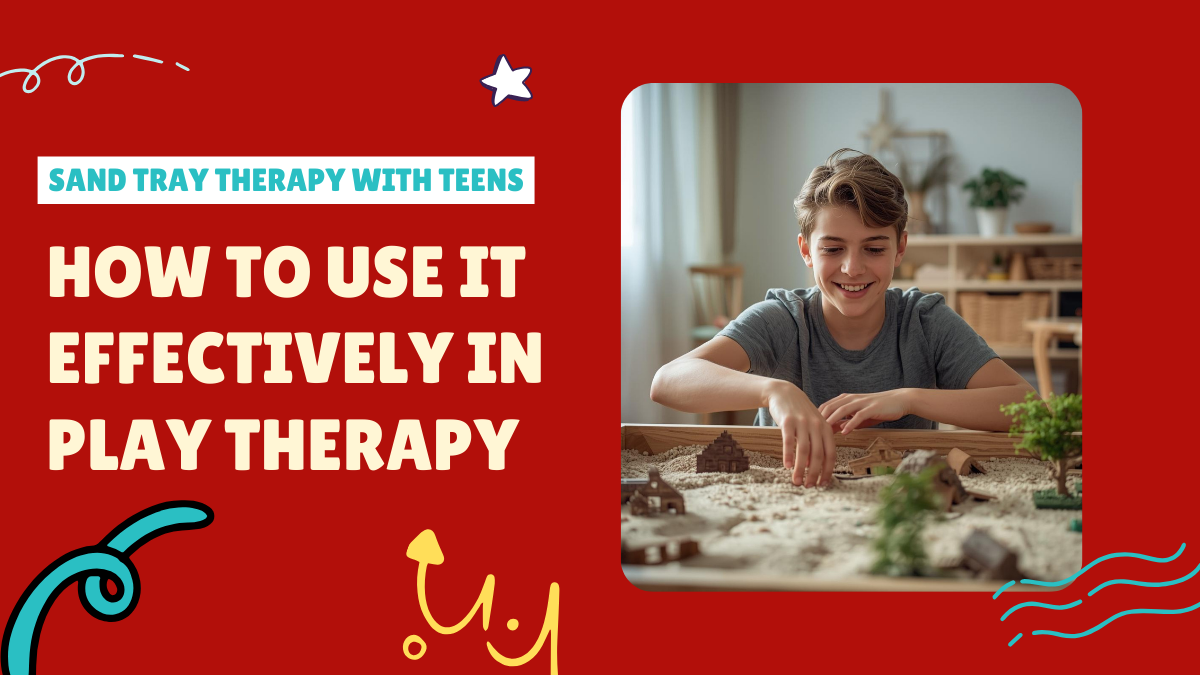
Practical ways to help adolescents express emotions, explore identity, and access the therapeutic powers of play through sand tray therapy.
Working with adolescents in play therapy can sometimes feel like walking a tightrope.
They’re not little kids anymore—but they’re not adults either.
And if you’ve ever sat across from a teenager who shrugs, gives one-word answers, or simply stares at the floor, you know exactly how challenging it can be to figure out what will actually help them engage in therapy.
One of the most powerful tools I’ve found for working with teens is sand tray therapy.
But the key question many play therapists ask is this:
Can sand tray therapy really work with adolescents?
The answer is yes—but the way you use it matters.
Let’s talk about how sand tray fits into the play therapy process and how to use it in ways that respect adolescents’ developmental and emotional needs.
Why Sand Tray Therapy Works With Adolescents
Sand tray therapy is a form of expressive arts that allows clients to communicate symbolically rather than verbally.
And for adolescents, that symbolic language can be incredibly powerful.
Many teens struggle to talk openly about their emotions. Sometimes they don’t have the words for what they’re experiencing. Other times, the feelings are simply too overwhelming to articulate.
Sand tray bypasses that barrier.
Instead of relying on verbal processing, adolescents can:
-
Express experiences symbolically
-
Explore internal conflicts safely
-
Access deeper emotional material without needing to explain it right away
In play therapy terms, sand tray helps clients access the therapeutic powers of play.
According to the Association for Play Therapy, play therapy involves using a theoretical model to help clients access the therapeutic powers of play within a strong therapeutic relationship.
Those therapeutic powers include things like:
-
Self-expression
-
Access to the unconscious
-
Creative problem solving
-
Emotional regulation
-
Attachment and relational repair
Sand tray is simply one pathway into those healing processes.
The Role of Your Theoretical Model
When using sand tray in play therapy, it’s not just about giving a teen access to a tray of sand and miniatures.
Your theoretical framework guides how you facilitate the process.
Your model influences:
-
What you say
-
When you say it
-
How directive you are
-
How you interpret the symbolism
-
How you conceptualize the client’s experience
Many play therapists use an integrative model, often drawing from approaches like:
-
Attachment theory
-
Interpersonal neurobiology
-
Polyvagal theory
-
Child-centered play therapy
-
Parts work (such as IFS)
Even in an integrative approach, your work is still grounded in theory. That grounding helps you make sense of what is unfolding in the sand tray.
Developmental Differences: Teens Aren’t Little Kids
One of the biggest mistakes therapists make is treating adolescents either like children or like adults.
They’re neither.
Children typically enter a playroom and start exploring immediately. For many kids, the playroom feels like magic—they jump right into the toys without hesitation.
Adolescents are different.
Teens usually need more runway before engaging in expressive modalities.
They often need to:
-
Sit and talk for a bit
-
Get comfortable with you
-
Test the safety of the relationship
-
Feel some control over the process
Only after that sense of safety develops can you begin to invite them into sand tray work.
Notice the word invite.
Adolescents need to know they have the option to say no.
That sense of autonomy helps build the safety required for deeper exploration.
Why Teens Don’t Always Need to Talk About Their Sand Tray
Another common misconception in therapy is that insight must always come through conversation.
But that isn’t always true.
In fact, I’ve seen many adolescents do profound therapeutic work in the sand tray without saying very much at all.
I once supervised a therapist working with a teen who had been diagnosed with selective mutism.
For nearly a year, the client came to therapy each week and created sand trays.
She rarely spoke.
But when we looked at the symbolic themes emerging in the trays, it became clear that she was processing deep emotional material.
Over time, changes appeared outside the therapy room as well.
The healing was happening.
And it wasn’t dependent on verbal processing.
That’s an important reminder for play therapists:
The goal isn’t always insight through words.
The goal is healing through the play process.
How Sand Tray Supports Brain-Based Healing
If you look at this work through a neuroscience lens, sand tray becomes even more meaningful.
Symbolic play allows adolescents to access implicit experiences—memories and emotional patterns stored outside of language.
Through sensory interaction with sand and symbols, clients can:
-
Express feelings that are difficult to verbalize
-
Explore internal conflicts safely
-
Integrate emotional experiences
When we combine sand tray with an attuned therapeutic relationship, we create the conditions for neural integration and emotional processing.
That’s where the real therapeutic work happens.
Helpful Sand Tray Prompts for Adolescents
Adolescents often benefit from gentle prompts when first learning how to use the sand tray.
These prompts provide structure while still allowing freedom and creativity.
Here are a few examples:
1. Representing an Emotional Experience
You might say:
“If you were to choose some miniatures that represent what depression feels like, which ones would you choose?”
Then invite them to place the symbols in the sand.
2. Exploring Family Dynamics
You could invite them to:
“Choose miniatures that represent each member of your family and how you see yourself within your family.”
3. Peer Relationships
Another prompt might be:
“Choose miniatures that represent how you think your friends see you.”
4. Parts Work
If you’re using a parts-based model, you might explore:
-
An angry part
-
A protective part
-
A scared part
By inviting the teen to represent each part symbolically.
5. Creating a Safe World
One of my favorite prompts early in therapy is:
“If you were to create a safe world in the sand, what would that look like?”
This helps teens experience control and safety within the therapeutic space.
The Power of Invitation
One word I always emphasize when working with adolescents is invitation.
We invite them into the process.
We invite them to explore symbols.
We invite them to share what they notice.
But we don’t pressure them.
Because pressure shuts down curiosity and safety.
And without safety, the play process doesn’t work.
Final Thoughts
Sand tray therapy can be an incredibly effective approach when working with adolescents.
But success depends on how we introduce and facilitate the process.
When we:
-
Respect adolescents’ developmental needs
-
Ground our work in a theoretical model
-
Create a free and protected therapeutic space
-
Use prompts thoughtfully
-
Allow symbolic expression to unfold naturally
…sand tray becomes a powerful pathway for healing.
And sometimes, the most meaningful work happens without a single word being spoken.
Categories: : Adolescents in Play Therapy, Art in Play Therapy, Expressive Arts, Play Therapy, Podcast, Sand Tray Therapy