Virtual Play Therapy Explained: Tools, Tips & Platforms for Play Therapists
 Cathi Spooner
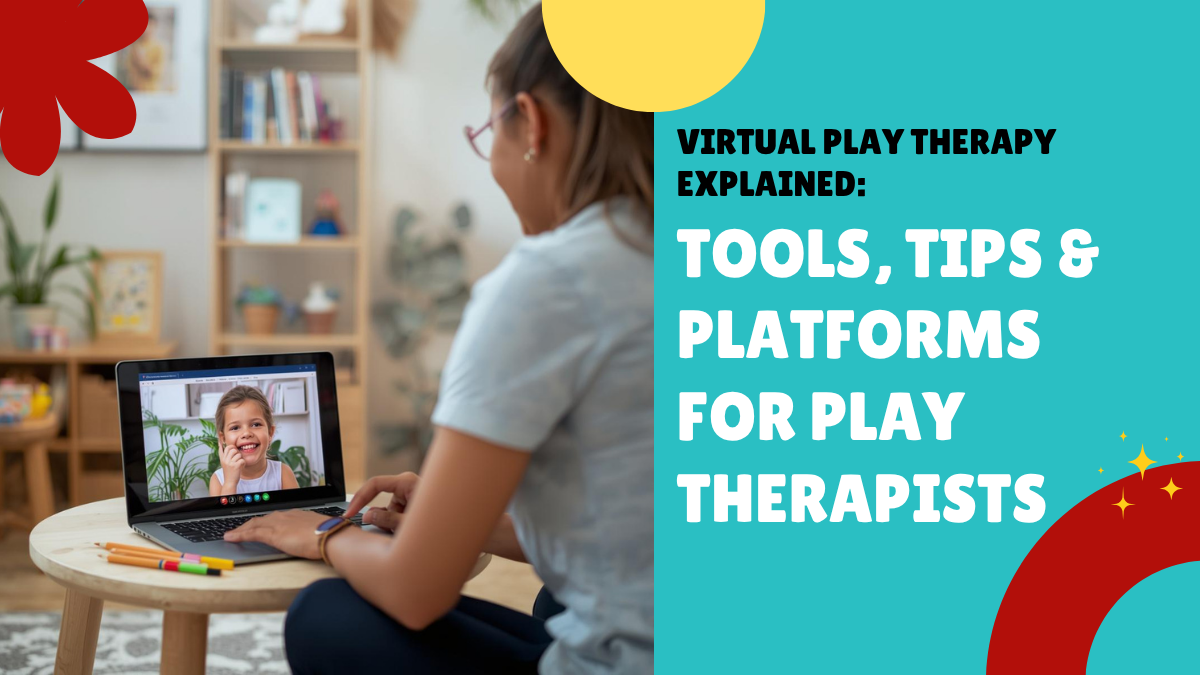
How to move beyond “Zoom + worksheets” and create engaging, effective virtual play therapy sessions
If you’ve ever tried to do play therapy over Zoom and thought…
“This is not working.”
“I feel like I’m losing the child’s attention every 2 seconds.”
“This doesn’t feel like real play therapy.”
You’re not alone.
When the world shifted during COVID, play therapists were forced—almost overnight—to figure out how to do deeply relational, expressive, symbolic work…
…through a screen.
And for most of us?
It felt clunky.
Disconnected.
And honestly… frustrating.
Because the truth is:
Most virtual platforms were never designed for play therapy.
The Real Problem With Virtual Play Therapy
Let’s name what’s actually happening.
Most platforms (Zoom, Google Meet, Teams) are built for:
- Meetings
- Conversations
- Presentations
They are not built for:
- Symbolic play
- Creative expression
- Relational attunement
- Engagement with children
So what do play therapists end up doing?
Piecing things together.
- Google Slides
- Screen sharing
- Worksheets
- Random online games
A little bit of this… a little bit of that…
A mishmash of tools that sort of work—but never fully.
Why Virtual Play Therapy Still Matters
Even with all the challenges…
Virtual play therapy is not going away.
In fact, it’s becoming more essential.
Because it allows you to:
- Reach clients in rural or underserved areas
- Work with specialized populations across a state (or beyond)
- Maintain consistency when life happens (weather, illness, logistics)
- Support families who otherwise wouldn’t have access
There are therapists right now doing incredible work virtually with:
- High-conflict families
- Trauma cases
- Teens who prefer digital spaces
The need is real.
The question is:
How do we do it well?
The Mindset Shift: It’s Not About Replicating In-Person
One of the biggest mistakes?
Trying to make virtual therapy look exactly like in-person therapy.
It won’t.
And it doesn’t need to.
Because virtual therapy actually offers something unique:
The ability to meet kids in their world.
Think about it:
- Kids are already engaging through screens
- Play is already happening digitally
- Creativity and expression exist online
So instead of forcing the old model…
We adapt the medium.
What Actually Works in Virtual Play Therapy
Let’s get practical.
Here’s what makes virtual play therapy effective:
1. Engagement Comes First
If the child isn’t engaged…
Nothing else matters.
And engagement online requires:
- Interactivity
- Movement (even digitally)
- Choice
- Personalization
👉 Passive talking doesn’t work.
2. Keep Everything in One Place
One of the biggest hidden problems?
Too many tabs.
The moment a child has to:
- Click another link
- Switch screens
- Navigate tools
You lose them.
They’re gone.
(Probably opening YouTube or another game.)
So the goal is:
One screen. One space. One experience.
3. Use Play-Based Tools (Not Just Talk Tools)
This is where many therapists get stuck.
They default back to:
- Talking
- Questioning
- Processing
Because the tools don’t support play.
But what actually works is:
- Sand tray (yes—even virtually)
- Drawing and art boards
- Games for rapport building
- Story creation
- Symbolic expression
The same therapeutic powers of play still apply.
Just in a different format.
4. Personalization Is Everything
Here’s something powerful about virtual work:
You can customize in ways you can’t in person.
For example:
- Turning a game into something the child loves (dogs, characters, themes)
- Creating personalized stories
- Using digital symbols that match their real life
That level of personalization:
Builds connection faster.
A Platform Designed for Play Therapists
This is where platforms like Playspace come in.
Because instead of piecing things together…
It brings everything into one place.
Inside a single session, you can have:
- A virtual playroom environment
- Sand tray therapy tools
- A dollhouse (including multiple home setups)
- Art/whiteboard space
- Interactive games
- Custom story creation tools
- Even AI-supported note-taking
And the key difference?
You and the client see the same thing, in real time.
No switching tabs.
No confusion.
No lost attention.
Why This Matters Clinically
This isn’t just about convenience.
It directly impacts your clinical work.
Because when you remove the tech friction:
- You stay attuned
- The child stays engaged
- The session feels relational again
And that’s where the work happens.
Not in the tools themselves—but in what they allow.
“But What About Teens?”
This comes up all the time.
“I don’t want it to feel babyish.”
That’s valid.
And here’s the good news:
Virtual tools can be:
- Simplified
- Neutralized (no “playroom” look)
- Used more like a toolkit instead of a toy space
For teens, this might look like:
- Whiteboard for expression
- Light games for rapport
- Symbolic work without it feeling childish
It’s all about how you frame it.
You Don’t Have to Figure This Out Alone
Let’s be honest:
Virtual play therapy has been a learning curve for everyone.
And trying to figure it out on your own?
That’s exhausting.
Which is why I always come back to this:
You need both training and community.
If You Want Support Applying This…
1. Play Therapy Elevation Circle
If you’re navigating things like:
- Virtual sessions
- Engagement challenges
- What tools to use and when
Inside Play Therapy Elevation Circle, we:
- Share ideas
- Talk through real cases
- Explore what’s working (and what’s not)
- Support each other in real time
👉 Because you don’t have to do this alone.
2. Play Therapy Academy (Deeper Skill Building)
If you’re ready to:
- Strengthen your clinical skills
- Learn how to apply play therapy models
- Get consistent consultation
Then Play Therapy Academy is where we go deeper.
Want to Try a Platform Like Playspace?
If you’re curious about simplifying your virtual sessions:
You can explore Playspace and try it out.
There are trial options available, and it’s worth experiencing it firsthand to see how it fits your style.
Final Thought
Virtual play therapy isn’t “less than.”
It’s just… different.
And when you:
- Shift your mindset
- Use the right tools
- Stay grounded in your model
👉 You can still create powerful, transformative experiences.
Even through a screen.
Categories: : Play Therapy, Play Therapy Themes, Podcast, Sand Tray Therapy