Sand Tray Therapy: Should You Interpret a Child’s Play? (3 Things to Consider)
 Cathi Spooner
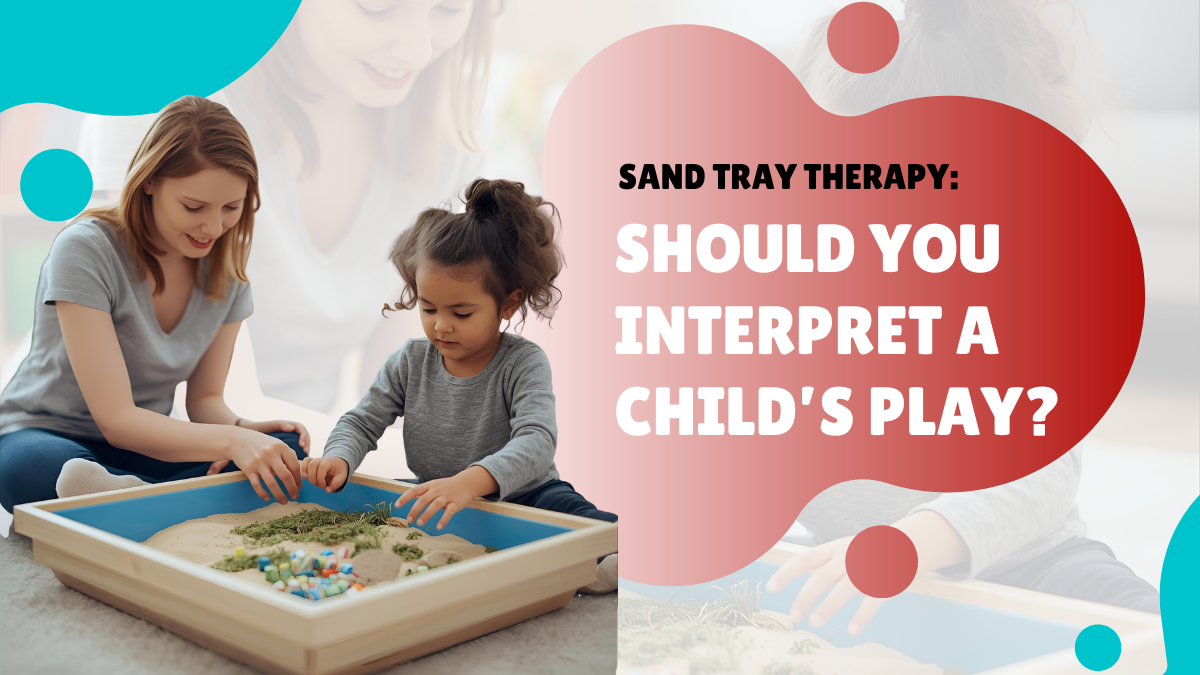
How to recognize themes, avoid interpreting too soon, and protect the healing process in sand tray therapy
If you’ve ever sat in a play therapy session watching a child carefully create a sand tray scene and thought…
“I know exactly what this means.”
You’re not alone.
This is one of the biggest questions play therapists wrestle with:
Should you share your interpretation of what you see?
Should you help connect the dots for your client so they can gain insight faster?
Or…
Should you hold back?
This question matters more than many play therapists realize because the answer can significantly impact the therapy process.
Interpret too soon, and you risk disrupting safety.
Wait too long, and you may wonder if you’re missing an opportunity.
So how do you know what to do?
The answer is more nuanced than “always interpret” or “never interpret.”
It depends.
And understanding what it depends on can make all the difference in how effectively you use sand tray therapy.
First: What Is the Real Role of Themes in Sand Tray Therapy?
Before we even talk about interpretation, we need to understand themes.
In play therapy, themes are the deeper internal struggles, needs, conflicts, or healing processes being expressed symbolically through play.
In sand tray, this means we are paying attention to more than just the miniatures.
We are noticing:
- What symbols are chosen
- What is missing
- Placement in the tray
- What is buried or elevated
- What is close together or far apart
- What faces toward or away from something
- Colors, categories, repetition, and symbolism
Themes help us understand what may be happening internally for the child.
But here’s the critical part:
Recognizing themes does not automatically mean you should share them.
This is where many newer play therapists can get stuck.
Just because you see something does not mean your client is ready for you to name it.
In fact, one of the most important reminders in sand tray work is this:
Your client’s healing does not depend on your immediate interpretation.
Sometimes the most therapeutic thing you can do is not analyze out loud.
It’s to hold the process.
The Healing Is in the Process, Not Just the Insight
This can feel counterintuitive, especially if you come from traditional talk therapy models where verbal insight is often emphasized.
But sand tray therapy is different.
Sand tray is a projective process.
Children (and adults) often use symbols to externalize internal experiences they may not yet have language for.
That means:
- The tray itself may be doing the work
- The symbolism may be processing something preverbally
- The scene may be helping regulate, organize, or transform internal distress
Your role is not always to explain.
Your role is often to protect.
This is why knowing how to create and hold a free and protected space is often more important than quickly interpreting what you think the symbols mean.
Three Critical Things to Consider Before Interpreting a Child’s Sand Tray
1. Your Ability to Recognize Themes Matters—But Presence Matters More
Yes, understanding themes is a critical clinical skill.
It helps with:
- Clinical decision making
- Treatment planning
- Assessing progress
- Identifying recurring struggles
But in the moment?
Your most important job is often:
Attunement.
Being:
- Present
- Regulated
- Observant
- Safe
- Congruent
Many experienced play therapists will tell you:
There are still sessions where they do not fully understand what is happening in the tray in real time.
And that’s okay.
You can often make deeper sense of themes later—during consultation, supervision, or progress notes.
In session, safety and connection often matter more than instant analysis.
2. Your Play Therapy Model Should Guide Your Decision
This is where theory matters.
Different play therapy models approach interpretation differently.
For example:
Child-Centered Play Therapy:
Typically avoids direct interpretation and prioritizes tracking, reflection, and trust in the child’s process.
Sandplay Therapy:
Focuses heavily on symbolic process and protected space without rushing interpretation.
Adlerian Play Therapy:
May eventually involve helping the child connect patterns and meaning more directly.
Gestalt or Integrative Models:
May include more active exploration depending on treatment stage.
This is why one of the most important questions is:
What does your theoretical model say?
Your model should influence:
- What you say
- How you say it
- When you say it
- Whether you say it
Without a grounded model, interpretation can become reactive or based too heavily on personal bias.
3. Consider the Child’s Readiness
This may be the most important factor of all.
Even the most accurate interpretation can feel intrusive if the child is not ready.
Timing matters.
Early in therapy, many children are still building:
- Safety
- Trust
- Regulation
- Relational security
If you interpret too soon, the child may feel:
- Exposed
- Misunderstood
- Pressured
- Unsafe
And when safety decreases…
The healing process can slow down.
Sometimes what feels like “helping” can actually create shutdown.
So before interpreting, ask yourself:
Is this child developmentally, emotionally, and relationally ready to receive this?
What to Do Instead: Two Powerful Alternatives to Direct Interpretation
If you feel tempted to interpret, but you’re unsure…
Here are two clinically powerful alternatives:
Stay in the Metaphor
Rather than saying:
“You feel abandoned.”
You might say:
“I wonder what it’s like for this one over here.”
Or:
“I wonder what this one might say.”
This keeps the child in symbolic exploration without forcing cognitive insight too quickly.
Give Voice to the Miniatures
This is one of the most effective ways to deepen exploration without overstepping.
Examples:
- “If this miniature could talk, what would it say?”
- “Is there another one in here that would want to respond?”
- “I wonder which one has the most to say.”
This approach allows symbolic distance while often revealing profound insight.
It also protects the child’s ownership of meaning-making.
Instead of you telling them what it means…
They show you.
A Quick Recap
When deciding whether to interpret sand tray themes:
Remember:
Themes matter…
…but they are primarily tools for understanding, not immediate disclosure.
Your model matters…
…because theory guides timing and intervention.
Readiness matters…
…because insight without safety can disrupt healing.
And sometimes…
The most powerful intervention is simply protecting the process.
You Don’t Have to Learn This Alone
Recognizing themes, understanding timing, and applying sand tray effectively are advanced clinical skills.
This is one of the reasons ongoing support matters so much.
Play Therapy Elevation CIRCLE
If you want community, consultation, book study, and support applying your training in real cases, Elevation CIRCLE helps you continue building confidence without doing this alone.
Play Therapy Academy
If you’re ready for a deeper dive into competencies, theory application, supervision, and advanced skill development, Play Therapy Academy offers more intensive support.
Upcoming Training:
Healing Trauma Through Play Therapy: A Neuroscience and Attachment Approach is also available for clinicians wanting to deepen their understanding of trauma, symbolic processing, and intentional intervention.
Final Thought
Sand tray therapy is powerful not because we interpret perfectly…
But because we know how to protect the process long enough for healing to unfold.
Sometimes the magic is not in saying more.
Sometimes…
It’s in knowing when to hold space.
Categories: : Play Therapy, Play Therapy Academy, Play Therapy Elevation Circle, Play Therapy Themes, Podcast, Sand Tray Therapy