Sand Tray Therapy: How to Identify Themes in a Play Therapy Session
 Cathi Spooner
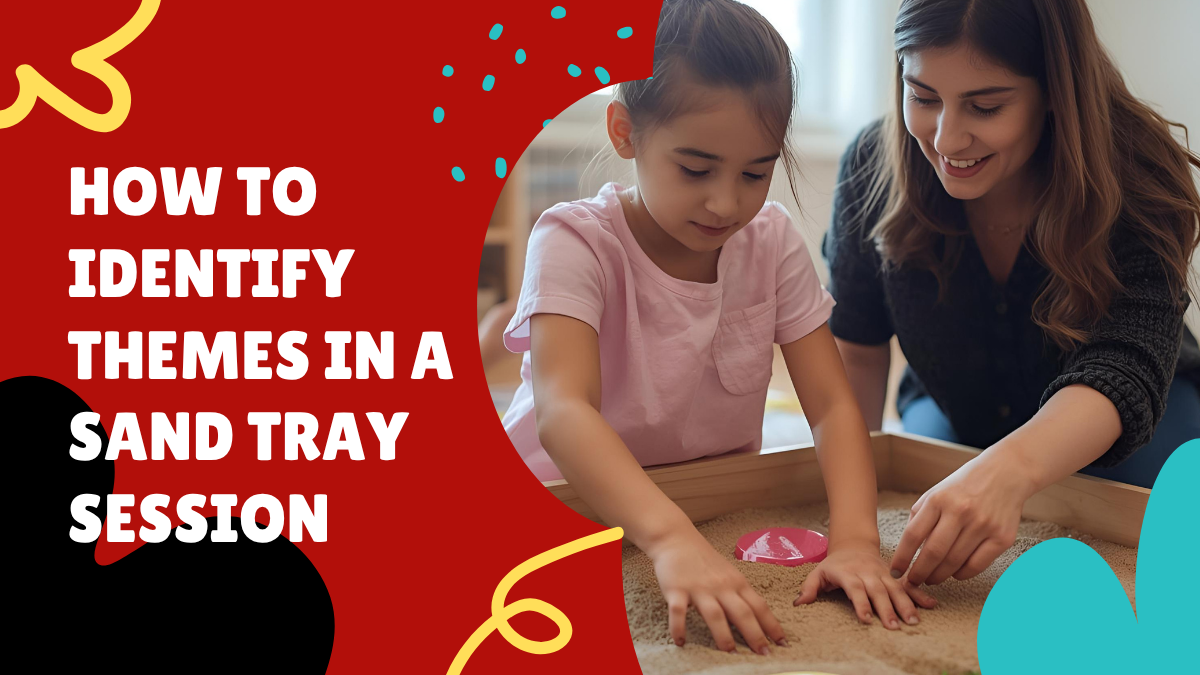
A practical guide to recognizing what your client is really communicating—so you can feel more confident and less stuck in your sessions.
If you’ve ever found yourself staring at a sand tray thinking…
👉 “What am I supposed to be seeing here?”
👉 “Am I missing something important?”
👉 “Everyone else seems to get this… why does this feel so hard?”
You are not alone.
Identifying themes in play therapy—especially in sand tray—is one of the most important skills to develop…
…and one of the hardest to learn without support.
But here’s the part most people don’t tell you:
👉 You don’t have to figure it all out in the moment for healing to happen.
Let’s take the pressure off—and then I’ll show you how to actually start seeing themes more clearly.
What Is a Play Therapy Theme (Really)?
A play therapy theme is not just “what’s happening” in the sand tray.
It’s deeper than that.
It’s the meaning the child is making of their experiences—expressed symbolically through play.
Themes reflect:
- Internal emotional struggles
- How the child interprets their world
- What they’re trying to work through
- Where they are in the healing process
In sand tray specifically, the tray becomes a visual representation of their inner world.
And your role?
To begin noticing the patterns—not forcing meaning onto them.
The Biggest Mistake Play Therapists Make
Let’s just name it.
👉 Trying to analyze the theme during the session.
When you do that, a few things happen:
- You get in your head
- You lose attunement
- You start second-guessing yourself
- You miss what’s actually unfolding
And most importantly…
👉 You disconnect from the child.
Because your primary job in session is not interpretation.
It’s:
- Presence
- Attunement
- Safety
- Following your model
Theme identification?
👉 That comes after.
What to Look for in the Sand Tray
Instead of trying to “figure it out,” shift into curiosity mode.
Think like a detective.
You’re gathering clues.
1. The Symbols (Miniatures)
What’s being used?
- Animals, people, weapons, nature, fantasy figures
- Repeated objects across sessions
- Missing elements (what’s not there matters too)
These symbols are the child’s language.
2. How the Symbols Are Used
This is where it gets interesting.
Look at:
- Is something buried? Hidden? Isolated?
- Is something elevated or protected?
- Is there chaos or organization?
- Is there movement or rigidity?
👉 The use of the object often matters more than the object itself.
3. Proximity and Relationships
What’s close together?
What’s far apart?
- Are figures connected or disconnected?
- Is there protection or threat between objects?
- Are certain elements isolated?
This often reflects relational dynamics—both internal and external.
4. The Process (Not Just the Outcome)
Watch what happens as they build:
- What gets placed first?
- What gets removed or changed?
- Where do they hesitate?
- Are they deeply engaged or disconnected?
👉 The process is the therapy.
5. What’s Said (and Not Said)
Some clients narrate everything.
Others say almost nothing.
Both are meaningful.
- Verbal storytelling can give direct clues
- Silence often signals deeper internal processing
6. Patterns Over Time
This is where themes really become clear.
👉 One tray = data point
👉 Multiple trays = pattern
Look for:
- Repeated scenarios
- Shifts in tone or organization
- Movement from chaos → order
- Movement from helplessness → empowerment
This is how you track progress.
Why Your Play Therapy Model Matters (A Lot)
Here’s something many therapists overlook:
👉 You don’t identify themes in a vacuum.
Your theoretical model shapes how you interpret what you see.
For example:
- A child-centered play therapist will focus on presence and trust the child’s process
- A Jungian sandplay therapist may look at archetypes and symbolic meaning
- A CBT or EMDR-informed therapist may focus on patterns, triggers, and regulation
- An Adlerian therapist may explore belonging, power, and lifestyle themes
Same tray.
Different meaning.
👉 That’s not wrong—that’s clinical lens.
Common Themes You’ll Start to Notice
Across most play therapy models, you’ll begin to see recurring patterns like:
Power and Control
A need to feel in charge, safe, or capable.
Helplessness or Hopelessness
Struggles with agency, confidence, or belief in change.
Safety vs. Danger
Indicators of anxiety, trauma, or fear.
Conflict
Internal struggles or external relational tension.
Attachment Needs
Longing for connection, security, or repair.
Here’s the key:
👉 Don’t just label the theme.
Ask yourself:
“How does this connect to what’s happening in this child’s life?”
That’s where your case conceptualization comes in.
You Don’t Have to Master This Alone
Let me be really clear about something:
👉 Identifying themes is not a skill most people can master on their own.
It takes:
- Practice
- Reflection
- Feedback
- Community
Even after decades of doing this work…
👉 I still consult with others.
Because this is deep, nuanced clinical work.
If You Want Support With This…
There are a few ways you can go deeper:
In-Person Sand Tray Training
If you really want to learn how to:
- Hold the process
- Interpret themes
- Build confidence
👉 The best way is hands-on learning.
I have a 2-day in-person sand tray training in St. George, Utah where we:
- Create sand trays
- Process them together
- Practice identifying themes in real time
You can find it here:
👉 Register for the Sand Tray Training
Ongoing Support: Play Therapy Elevation CIRCLE
Because training alone isn’t enough.
You need a place to apply what you learn.
Inside Play Therapy Elevation Circle, you get:
- Monthly consultation calls (bring your cases!)
- Group support from other play therapists
- Book club (we’re reading Being a Brainwise Therapist)
- Ongoing discussions about themes, neuroscience, and application
👉 When you register for a training, you get 60 days access (new members).
Want to Go Deeper? Play Therapy Academy
If you’re ready to:
- Master your skills
- Work toward your RPT
- Get consistent, high-level consultation
Then Play Therapy Academy is where we go deeper.
We:
- Review real sand trays together
- Identify themes as a group
- Strengthen your clinical thinking
👉 This is where your confidence really grows.
Final Thought
If you take nothing else from this:
👉 You don’t have to “get it right” in the session.
Be present.
Stay attuned.
Trust the process.
Then later…
👉 Reflect, review, and learn from the patterns.
That’s how you become a stronger play therapist over time.
Categories: : Play Therapy, Play Therapy Themes, Podcast, Sand Tray Therapy